
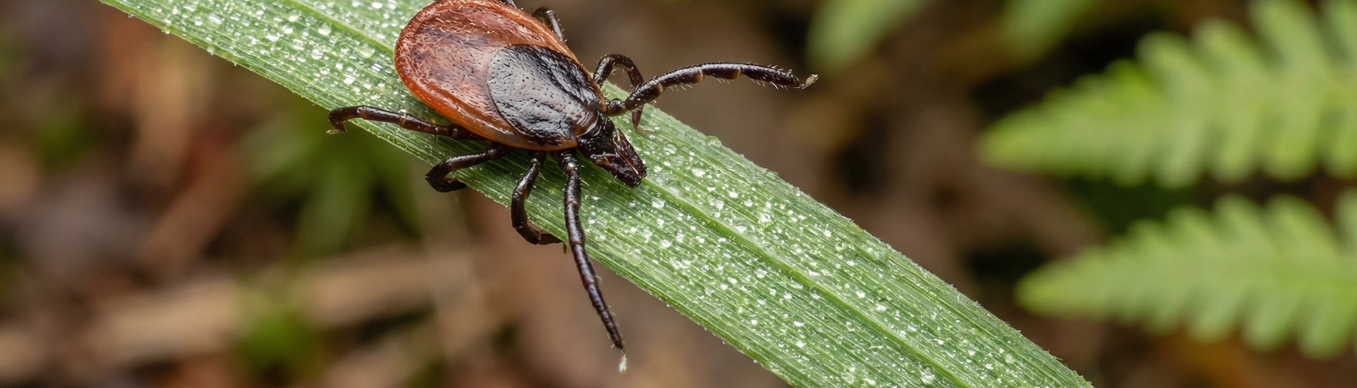
Ticks are active longer in Nova Scotia than most homeowners realize — and each year, the timeline shifts slightly as winters warm and tick populations expand. Here’s what you need to know heading into the 2025 season.
When Does Tick Season Start in Nova Scotia?
Ticks typically become active once temperatures rise above 4°C, meaning they can be found as early as March on mild years.
Activity increases sharply through:
-
- April – adults + nymphs become active
- May–June – peak season begins
- July–August – high risk around shaded areas and woodlines
- September–October – secondary spike in adult tick activity
Blacklegged (Deer) Ticks can remain active into November and December if temperatures stay above freezing.
Why Ticks Are Expanding Across Nova Scotia
Several factors contribute to Nova Scotia’s rising tick presence:
-
- Shorter winters
- Higher deer and rodent populations
- Growing wooded subdivisions
- Increased human + pet outdoor activity
This combination creates ideal tick breeding and feeding conditions.
Highest-Risk Areas Around Your Property
Ticks thrive in:
-
- Shaded areas along woodlines
- Leaf litter
- Tall or unmowed grass
- Heavily treed yards
- Edges of walking paths
- Damp, brushy areas
Even yards that appear “well maintained” can still have high micro-zones of activity.
How Homeowners Can Reduce Risk
Simple steps help lower exposure:
-
- Keep grass trimmed
- Clear debris + leaves
- Create stone or mulch borders along tree lines
- Reduce rodent attractants (fallen bird seed, wood piles)
- Use pet tick preventatives consistently
For full-yard protection, recurring garlic-based tick treatments provide a reliable deterrent throughout the season.